

You’re sitting in front of a glowing screen, thumb hovering over the spin button. The reels blur, symbols align, and for a split second your heart races—then stops. Nothing. But you spin again. And again. Why? The answer isn’t just luck or greed; it’s a complex interplay of neuroscience, game design, and human emotion. In this deep dive, we’ll unpack the psychological hooks that make slots, poker, and sports betting so compelling, and how you can use that knowledge to stay in control.
B.F. Skinner’s research on operant conditioning revealed that the most powerful reward schedule is the variable ratio—where a reward is given after an unpredictable number of responses. Slot machines are the perfect embodiment of this. Unlike a fixed-ratio schedule (e.g., a free spin every 10th pull), variable ratio keeps you guessing. You never know which spin will hit, so you keep playing. This is why slot players often report feeling “due” for a win after a dry spell—a cognitive bias known as the gambler’s fallacy. But random number generators (RNGs) have no memory; each spin is independent. Yet the illusion of control persists, fueled by near-misses (two cherries and a lemon) that activate the brain’s reward circuitry almost as strongly as a real win.
Every element of a modern slot machine is engineered to keep you spinning. The bright colors, the celebratory jingles, the animated characters—they’re not just decoration. They trigger dopamine release, the neurotransmitter associated with anticipation and pleasure. Crucially, dopamine spikes not only when you win but also when you anticipate a win. That’s why the brief pause before the reels stop is so tantalizing. Game designers use “losses disguised as wins” (LDWs)—where you “win” less than your bet, but the machine still plays a winning sound and animation. Your brain registers the celebration, even though your wallet is lighter. Over time, this conditions you to associate spinning with feeling good, regardless of the outcome.
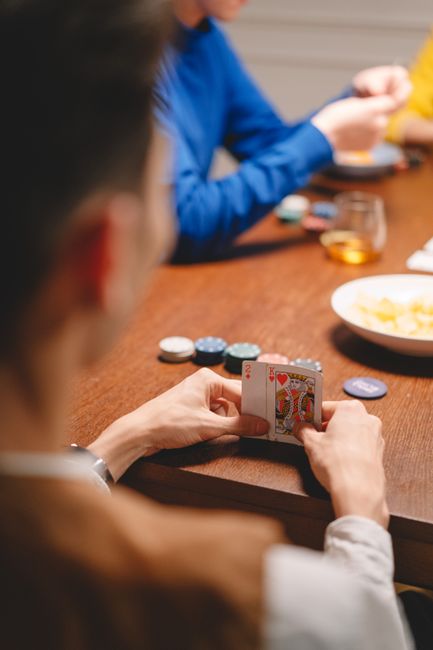
Poker attracts a different crowd—those who believe skill can overcome chance. And to some extent, it can. But even seasoned pros fall prey to psychological traps. Tilt is the emotional state after a bad beat, where frustration leads to reckless decisions. It’s the poker equivalent of chasing losses on slots. Another trap is results-oriented thinking: judging a decision by its outcome rather than its expected value. You might make a heroic call with a weak hand, get lucky, and reinforce bad habits. The best players learn to separate process from outcome, but it takes discipline. Online poker adds another layer: anonymity and speed. You can play thousands of hands per hour, and the faster the game, the harder it is to stay rational. Multi-tabling, while profitable for some, can turn poker into a slot-like experience—mindless clicking rather than thoughtful strategy.
Sports betting hooks fans because it transforms passive viewing into active engagement. Suddenly, every possession matters. But the psychology is tricky. The narrative fallacy leads us to create stories around random events: “The team is due for a win,” or “The star player always delivers in the clutch.” Bookmakers exploit this by setting lines that cater to public bias. For example, the public loves favorites and overs, so sportsbooks shade those lines. Another quirk: cash-out features. They give you the illusion of control, letting you lock in a profit before the game ends. But mathematically, cashing out early often reduces your expected value. It feels safe, but it’s a trap. Readers looking for specifics may like สล็อต.
Understanding the psychology doesn’t mean you can’t enjoy gambling. It means you can do it with your eyes open. Here are concrete strategies to stay in control:
Gambling is designed to be immersive, and the psychological hooks are powerful. But awareness is your best defense. The next time you feel that itch to spin just one more time, ask yourself: Is this still fun, or am I chasing a feeling? The smartest gamblers aren’t the ones who win the most—they’re the ones who know when to stop.

Hidden Perch shares practical, down-to-earth guidance on uk birdwatching, nature reserves, and hidden outdoor viewpoints for readers across the UK.


Leave A Comment